AI-Based Business Automation: The Future of Smart Business Growth in 2026
Autolinium Team
Architectural Team
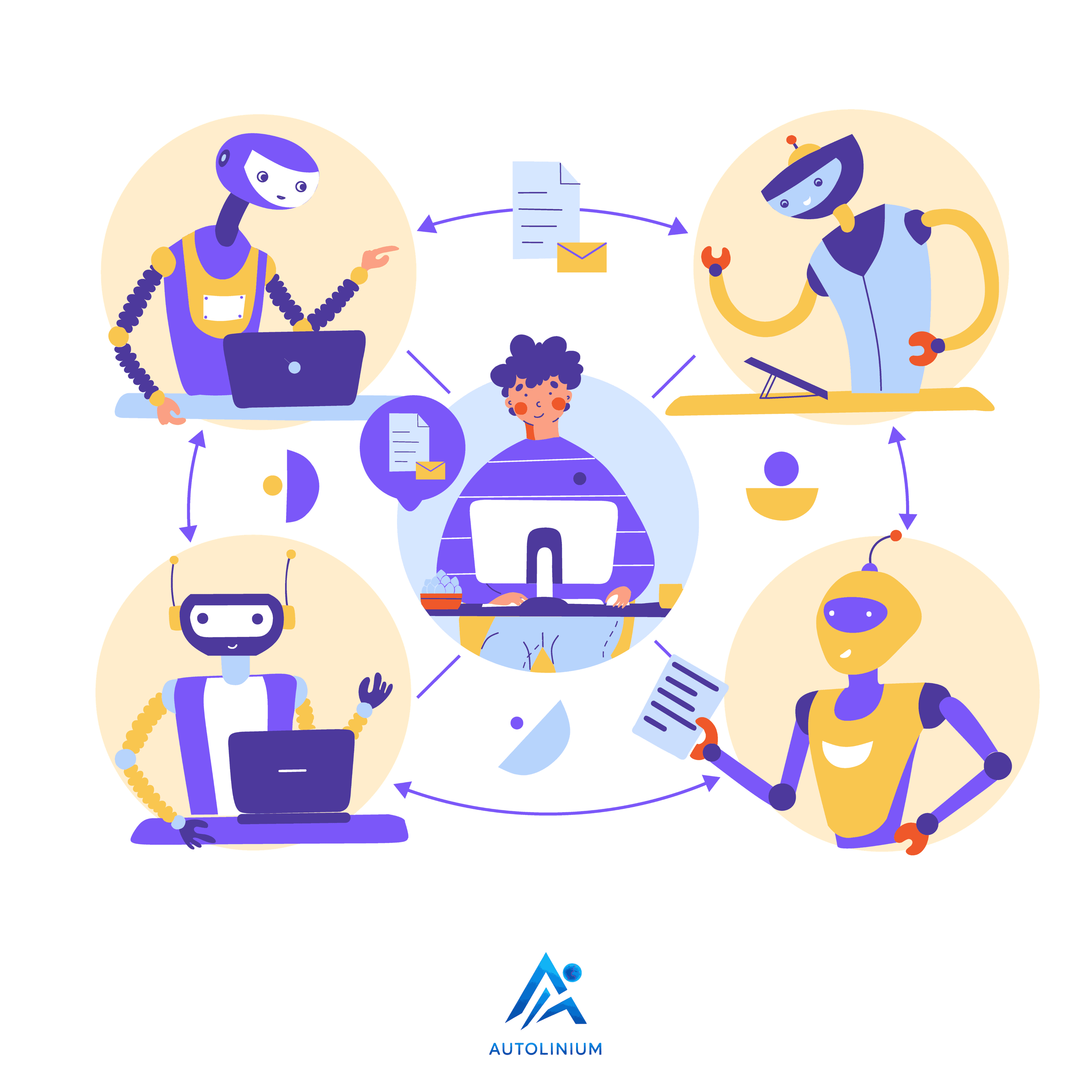
Artificial Intelligence (AI) Is No Longer a Futuristic Concept
Today, businesses of all sizes are using AI-powered automation to reduce operational costs, increase productivity, improve customer experiences, and scale faster than ever before. From customer support chatbots to intelligent marketing systems and automated business workflows, AI-based business automation is transforming industries worldwide.
In 2026, companies that fail to automate repetitive tasks risk falling behind competitors that use AI to optimize operations in real time. Whether you own a startup, an eCommerce store, a real estate company, a restaurant, or a service-based business, AI automation can dramatically improve efficiency while saving both time and money.

What Is AI-Based Business Automation?
AI-based business automation refers to the use of Artificial Intelligence technologies to automate repetitive, rule-based, and data-driven business tasks with minimal human intervention. Unlike traditional automation systems that follow fixed rules, AI automation can learn patterns, analyze data, make predictions, and improve over time.
AI business automation combines:
- Artificial Intelligence (AI)
- Machine Learning (ML)
- Natural Language Processing (NLP)
- Workflow Automation
- Data Analytics
to automate business operations intelligently.
Why AI Automation Matters in Modern Business
Businesses generate massive amounts of data daily. Managing customer communication, sales pipelines, inventory, marketing campaigns, employee management, and financial records manually is inefficient and expensive.
AI automation solves these problems by:
- Eliminating repetitive tasks
- Reducing human errors
- Improving operational speed
- Enhancing customer experience
- Increasing profitability
- Delivering real-time insights
According to industry reports, companies implementing AI automation can reduce operational costs by up to 40% while significantly increasing productivity.
Core Components of AI-Based Business Automation

1. Machine Learning
Machine Learning allows systems to learn from historical data and improve performance automatically. Examples include:
- Sales prediction
- Customer behavior analysis
- Fraud detection
- Product recommendations
2. Natural Language Processing (NLP)
NLP enables machines to understand human language. Common NLP applications:
- AI chatbots
- Voice assistants
- Automated customer support
- Sentiment analysis
3. Robotic Process Automation (RPA)
RPA automates repetitive digital tasks such as:
- Data entry
- Invoice processing
- Appointment scheduling
- Report generation
4. Predictive Analytics
Predictive AI analyzes historical data to forecast future outcomes. Businesses use it for:
- Demand forecasting
- Customer retention
- Inventory planning
- Revenue prediction
Benefits of AI-Based Business Automation
Increased Productivity
AI systems work 24/7 without breaks, allowing businesses to process tasks faster and more efficiently.
Cost Reduction
Automation reduces dependency on large operational teams, minimizing labor costs and human errors.
Better Customer Experience
AI chatbots and virtual assistants provide instant responses, improving customer satisfaction and engagement.
Faster Decision-Making
AI analyzes large datasets in seconds, helping business owners make data-driven decisions quickly.
Improved Scalability
Businesses can scale operations without proportionally increasing workforce expenses.
Enhanced Accuracy
Automated systems reduce manual mistakes in accounting, inventory management, customer communication, and reporting.
AI Automation Use Cases Across Industries
AI Automation in Real Estate
Real estate businesses use AI for:
- Property recommendation systems
- Automated lead generation
- Virtual property tours
- AI customer support
- Rental management automation
AI Automation in Restaurants
Restaurants use AI-powered systems for:
- Online order automation
- Smart inventory management
- Customer feedback analysis
- AI-driven marketing campaigns
- Automated reservation systems
AI Automation in eCommerce
eCommerce businesses heavily rely on AI automation for:
- Personalized product recommendations
- Abandoned cart recovery
- Dynamic pricing
- AI customer support
- Automated email marketing
AI Automation in Healthcare
Healthcare organizations use AI for:
- Appointment scheduling
- Patient data analysis
- Diagnostic assistance
- Medical imaging interpretation
- Administrative automation
AI Automation in Marketing
Popular AI marketing automation features include:
- Content generation
- SEO optimization
- Ad targeting
- Customer segmentation
- Social media scheduling
- Predictive customer analytics
How AI Automation Improves SEO and Digital Visibility
AI and Semantic SEO
Semantic SEO focuses on understanding user intent and contextual meaning rather than keyword stuffing. AI helps businesses:
- Identify search intent
- Build topical authority
- Generate entity-based content
- Optimize contextual relevance
What Is AEO (Answer Engine Optimization)?
Answer Engine Optimization (AEO) helps content rank in AI-generated answers, voice search results, and featured snippets. To optimize for AEO:
- Use question-based headings
- Provide concise answers
- Structure content clearly
- Use conversational language
- Include FAQs
What Is GEO (Generative Engine Optimization)?
Generative Engine Optimization (GEO) is the process of optimizing content for AI-driven search systems such as generative AI assistants and conversational search engines. GEO strategies include:
- Creating authoritative content
- Structuring information logically
- Using entity-rich language
- Building topical depth
- Maintaining factual accuracy
Essential AI Automation Tools for Businesses
AI Chatbots
AI chatbots automate customer support and lead generation. Popular tools include:
- ChatGPT-based bots
- Drift
- Intercom
- Tidio
CRM Automation Platforms
AI-powered CRM systems help businesses manage customer relationships efficiently. Features include:
- Automated follow-ups
- Lead scoring
- Sales forecasting
- Customer segmentation
Examples: HubSpot, Salesforce Einstein, Zoho CRM
AI Marketing Tools
Businesses use AI tools for content creation, ad optimization, keyword research, and social media automation. Examples: Jasper AI, Surfer SEO, Copy.ai, SEMrush AI tools
Workflow Automation Platforms
Workflow automation connects multiple business applications together. Examples: Zapier, Make.com, n8n, Microsoft Power Automate

Steps to Implement AI-Based Business Automation
Step 1: Identify Repetitive Tasks
Analyze which tasks consume the most time and resources. Common automation opportunities:
- Customer support
- Data entry
- Appointment scheduling
- Email management
- Inventory tracking
Step 2: Define Business Goals
Clearly define objectives such as:
- Reducing costs
- Improving customer support
- Increasing sales
- Scaling operations
Step 3: Choose the Right AI Tools
Select tools that integrate with your existing systems. Consider scalability, ease of use, integration capabilities, security, and support.
Step 4: Train Your Team
Employees should understand how AI systems work and how to collaborate with automation technologies effectively.
Step 5: Monitor and Optimize
AI automation is not a one-time setup. Businesses must continuously:
- Analyze performance
- Improve workflows
- Update AI models
- Optimize automation strategies
Challenges of AI Business Automation
- Initial Investment Costs — Some AI solutions require upfront investment in infrastructure and implementation.
- Data Privacy Concerns — Businesses must protect customer data and comply with regulations.
- Integration Complexity — Legacy systems may require customization for AI integration.
- Employee Resistance — Some employees may fear job displacement. Proper training and communication help reduce resistance.
Future of AI-Based Business Automation
AI automation will continue evolving rapidly over the next decade. Future trends include:
- Hyper-personalized customer experiences
- AI-driven decision-making
- Autonomous business systems
- Voice-based AI interfaces
- Advanced predictive analytics
- Human-AI collaboration models
Businesses adopting AI early will gain significant competitive advantages.
Frequently Asked Questions (FAQ)
What is AI-based automation? AI-based automation uses Artificial Intelligence technologies to automate business tasks, workflows, and decision-making processes.
How does AI improve business efficiency? AI reduces manual work, increases operational speed, minimizes errors, and provides real-time insights for better decision-making.
Is AI automation expensive? The cost varies depending on business size and complexity. However, many affordable AI tools are now available for small businesses and startups.
Can small businesses use AI automation? Yes. Small businesses can automate customer support, marketing, sales, scheduling, and operations using affordable AI tools.
What industries benefit most from AI automation? Industries such as real estate, healthcare, eCommerce, restaurants, logistics, finance, and digital marketing benefit significantly from AI automation.
Conclusion
AI-based business automation is no longer optional in the modern digital economy. It has become a powerful competitive advantage for businesses seeking growth, efficiency, scalability, and improved customer experiences.
From automating customer support and marketing to optimizing operations and data analysis, AI enables businesses to operate smarter and faster than traditional systems.
Companies that invest in AI automation today position themselves for long-term success in an increasingly AI-driven world. As technologies continue advancing, businesses embracing AI, AEO, GEO, and Semantic SEO strategies will dominate both search visibility and operational efficiency in the future.
If your business wants to stay competitive in 2026 and beyond, implementing AI-based automation should be a top strategic priority.
Related Services
Business Process Automation Services
Streamline repetitive operations and internal workflows.
ExploreMarketing Automation Services
Automate lead generation, outreach, and conversion workflows.
ExploreCustom Software Development Services
Build software tailored to your exact operations and growth model.
ExploreAbout Autolinium Team
Our architectural team focuses on building high-performance, scalable AI systems that transform modern business operations.