AI With Google: How Much Easier Has Search Become in 2026?
Autolinium Team
Architectural Team
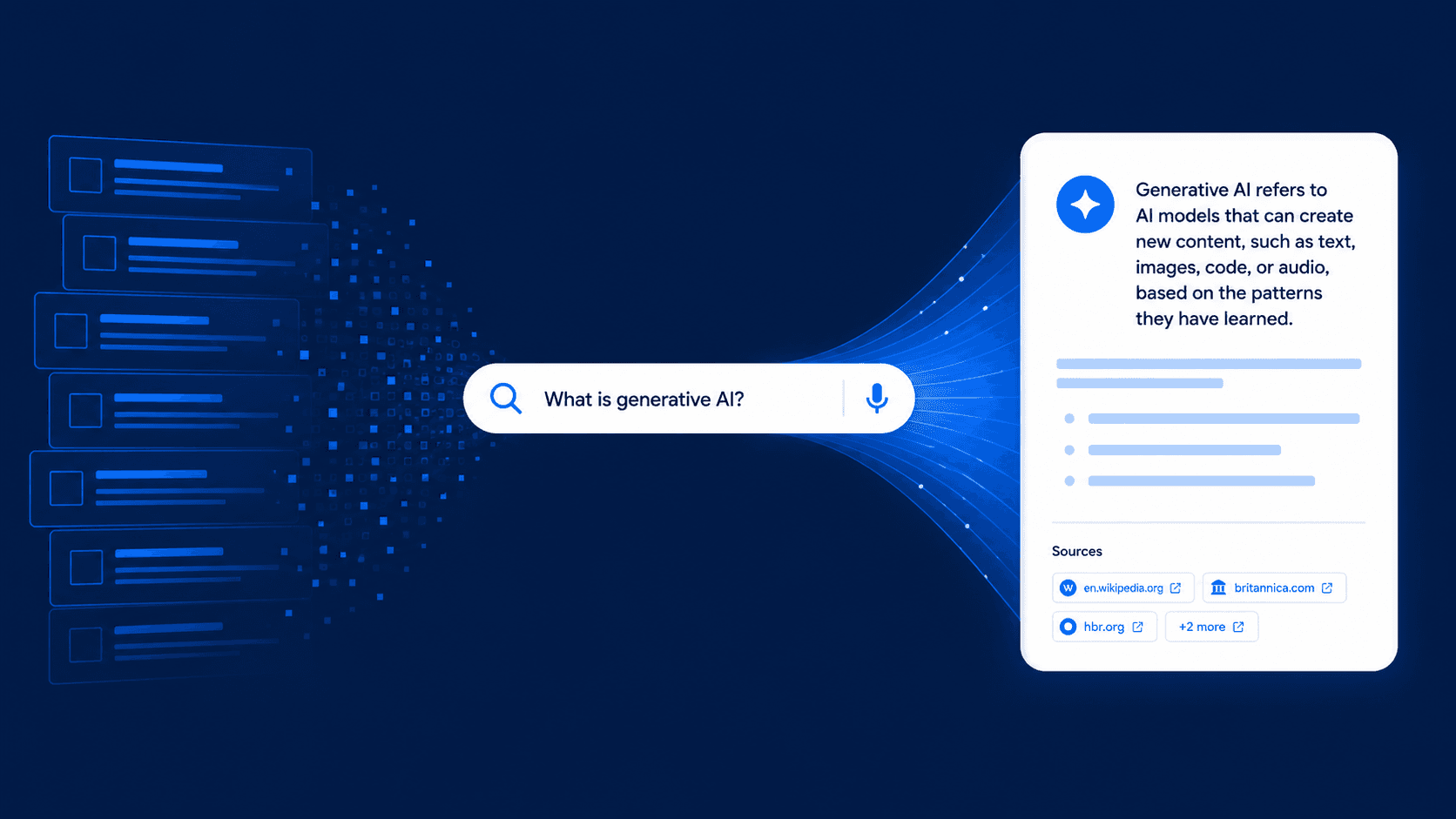
AI With Google: How Much Easier Has Search Become?
Quick answer: Google search is easier today because AI writes the answer right on the results page instead of handing you ten links. In 2026, 68 percent of US Google searches end without a click, according to SparkToro. The trade off is that you now check the facts yourself, and websites get far less traffic than before.
What Does "AI With Google" Mean Today?
Google no longer treats AI as a side feature. Its Gemini models now sit inside Search, Chrome, Android, Workspace and Google Cloud. When people say "AI with Google," they usually mean one of two things.
AI Overviews
An AI written summary that sits at the top of the normal search results page. The blue links are still there below it.
AI Mode
A separate, chat style search page. Instead of a ranked list, it writes a full answer and lets you keep asking follow up questions. At Google I/O 2026, Google moved AI Mode from an experiment to a core part of Search, running on the Gemini 3.5 Flash model. Google said AI Mode had passed one billion monthly users.
How Does AI Work Like a Friend Inside Google?
The word "friend" fits better than "tool" here, for three reasons.
It remembers the conversation. You can ask a follow up question straight from an AI Overview and slide into a full AI Mode chat. Your earlier context comes along with you.
It can look at your own data. You can connect Gmail and Google Photos so answers match your life, not just the open web. You choose what gets connected.
It can do the job, not just describe it. Google added agentic features in 2026. Chrome can browse and click through multi step tasks for you, and it asks for permission before anything sensitive.
Is Google Search Easier Now Than Before?
Yes for simple questions. Not always for serious ones.

What Got Easier
Before, you typed two or three keywords, opened five tabs, and joined the pieces together in your head. Now you ask a full question in normal language and get one clear answer. Definitions, comparisons, recipes, small coding problems and "which one is better" questions are far faster than they used to be.
What Got Harder
Three new costs came along with the speed.
- You are the fact checker now. A smooth paragraph hides its weak spots. If the answer matters, you still have to open the sources.
- Ads sit inside the answer. Google placed ads directly into AI Overview responses in 2026. Telling an ad apart from an answer is harder than it was.
- You see fewer viewpoints. Ten links gave you ten opinions. One summary gives you the one the model picked.
There is a twist, too. Easier searching did not mean less searching. SparkToro found that the share of searches leading to another Google search rose by 7.2 percentage points. Each step is easy, so people simply take more steps.
How Much Has Google Gained From AI?
A lot. Google already owned the data, the chips, the data centres and the research team, so it started the race well ahead.
In the second quarter of 2026, Alphabet reported 119.8 billion dollars in revenue, up 24 percent year over year. Google Cloud grew 82 percent to 24.8 billion dollars. Search and other revenue still grew 17 percent to 63.3 billion dollars, which means AI did not kill search advertising the way many people predicted.
The bigger surprise is hardware. Google built its TPU chips for its own workloads for a decade. Now it sells them. Anthropic signed a deal covering five gigawatts of TPU capacity worth up to 40 billion dollars, and Meta signed a separate TPU deal in 2026.
Is There a Conflict Between Google and AI?
Yes, and there are two serious ones.

Google Against Itself
Advertising brings in roughly three quarters of Alphabet's money, and that model needs people to click through to other pages. But when AI Mode answers a question, 93 percent of those searches end with no outside click at all. Analysts call this a classic innovator's dilemma. Google is being pushed to break the old web model before a rival breaks it first.
Google Against Publishers
For twenty years the deal was simple. Websites gave Google content, and Google sent back visitors. That deal is coming apart. Google search traffic to publishers fell 33 percent worldwide in the year to November 2025, based on Reuters Institute and Chartbeat data. Penske Media filed an antitrust lawsuit, and the European Publishers Council filed a formal complaint with the European Commission.
The risk here is circular. If publishers stop writing, the AI eventually runs out of material to summarise.
What Should Website Owners Do Now?
Ranking first is no longer the same as being seen. Ahrefs found in 2026 that only about 38 percent of the URLs cited inside AI Overviews also ranked in Google's top ten for the same query.
Here is what actually helps:
- Write a 40 to 60 word answer under every heading. It has to make sense on its own, with no "as we said above."
- Turn headings into questions. AI systems match headings to the way real people ask things.
- Publish data nobody else has. Your own survey, benchmark or price comparison gives a model a reason to cite you instead of someone else.
- Build entity signals. Wikidata, LinkedIn, consistent naming everywhere, and Organization schema on your site.
- Let the AI crawlers in. Check your robots.txt for GPTBot and OAI-SearchBot before anything else.
- Measure citations, not only clicks. Track how often each AI engine names your brand for your priority questions.
One comfort: fewer clicks does not always mean less money. Visitors who arrive after seeing an AI mention often arrive much closer to a decision.
Frequently Asked Questions
Is Google search still worth using in 2026?
Yes. Google Search revenue grew 17 percent to 63.3 billion dollars in the second quarter of 2026, and Google says its AI features are increasing query volume rather than reducing it.
What is the difference between AI Overviews and AI Mode?
AI Overviews is an AI summary placed above the normal list of links. AI Mode is a separate conversational page that replaces the link list with a written answer and follow up questions.
Does AI make Google search less accurate?
Not always, but the responsibility shifts. The answer looks confident even when one line inside it is wrong, so open the cited sources whenever the decision matters.
Will AI kill SEO?
No, it changes the target. Google's own 2026 guidance says optimising for its generative features is still SEO. GEO and AEO are a layer on top of solid SEO, not a replacement for it.
Why do fewer people click links now?
Because the answer is already on the page. When an AI Overview appears, click through rates drop by nearly 60 percent, and in AI Mode the zero click rate reaches 93 percent.
The Short Answer
AI with Google made searching easier and made Google richer. It did not make the internet simpler. Users saved time but took on the job of checking facts. Google won on cloud and chips while quietly weakening the click that pays its bills. And the websites that fed the whole system are still waiting to find out what replaces the traffic they lost.
The smart move now is not to fight the change. It is to make sure that when the AI writes the answer, your name is inside it.
written by : Mohammad Sakib Ridwan
Head of Branding ,Autolinium
Related Services
Marketing Automation Services
Automate lead generation, outreach, and conversion workflows.
ExploreBusiness Process Automation Services
Streamline repetitive operations and internal workflows.
ExploreCustom Software Development Services
Build software tailored to your exact operations and growth model.
ExploreAbout Autolinium Team
Our architectural team focuses on building high-performance, scalable AI systems that transform modern business operations.